How to make a Will?
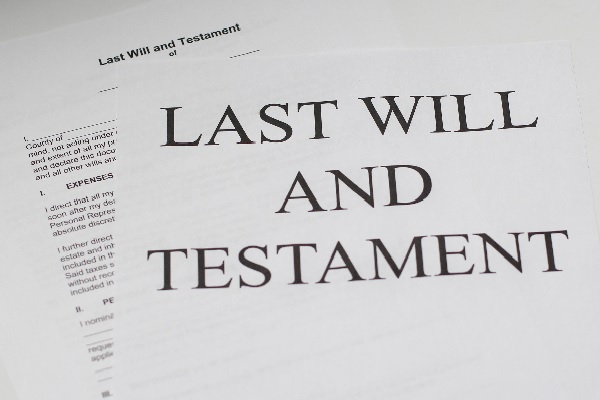
Some people are reluctant to make a Will, either because they do not like contemplating their own death or because they think it is something that they can put off until they are older. It is advisable for everyone to make a Will to avoid creating additional problems for our families when we die.
Marriage or Civil Partnership
You should normally make a new Will when you marry or remarry. Wills made before your marriage will be revoked and will no longer be valid unless the Will states that it is made in contemplation of that marriage. As with marriage, entering into a Civil Partnership automatically revokes a Will and a new Will would have to be made or a Codicil signed.
Co-habiting
The Intestacy Rule makes no provision for the survivor of an unmarried couple and therefore, a Will is needed to provide for your partner.
Children
Making a Will enables you to avoid restrictive statutory trusts for children who may need greater provision than their brothers or sisters. Additionally, appointing a Guardian for orphaned children under 18 years can be done through a Will.
Divorce
A new Will should be made when contemplating divorce. When a Decree Absolute of Divorce is made by the Court the former husband or wife loses all rights on an Intestacy and also any right to benefit under any existing Will.
Retirement
A Will can ensure you avoid care home fees or crippling inheritance tax.
Leaving money to charity or friends
This can be done by making provisions for them in your Will.
Once you have made a Will
It is important to keep it under review at least every 5 years. Circumstances and the law, can change and impact on your Will. A Will should also be reviewed when any major changes in the family or in finance occur.
Making a Will when incapacitated
If someone does not have testamentary capacity, then a will needs to be constructed for them. This is commonly known as a ‘statutory will’. A statutory will can only be made by the authority of the Court of Protection and we can advise you on the process.
What is an Executor of a Will and what do they do?
An executor of a Will or an administrator if the deceased died without a Will (intestate), has a duty to identify the assets (money, property, etc.) and liabilities (any outstanding debt owed) of the estate and distribute them to the beneficiaries. Normally, a grant of probate is required to gain access to the assets of an estate in order to carry out the wishes of the deceased if the value of the deceased’s estate after paying the funeral account is over £5,000.
For more information about making a Will, please download our leaflet here.
Estate planning considerations
Will I have to pay tax when I die?
It may be possible to arrange your affairs and prepare your Will so as to reduce the amount of tax payable when you die and thereby make greater provision for your family. The introduction of the transferable nil rate band (the Nil Rate Band is the threshold at which one starts to pay inheritance tax (IHT)) has brought a significant benefit to spouses and civil partners. We can advise you whether this benefit is available to you. Despite the introduction of the transferable nil rate band the use of nil rate band trusts may still be useful in certain circumstances. Possible reasons include where the surviving spouse already has an additional nil rate band available (i.e. for remarried spouses, following the death of a spouse), for asset protection purposes (e.g. in the event of financial or marriage failure); where it is likely that the survivor may remarry; or if the value of an asset is likely to increase faster than increases in the nil rate band, or if the asset qualifies for business or agricultural property relief.
If you are faced with paying care home fees
It is against the law to transfer ownership of an asset to another person specifically to avoid paying your care home fees. There is no time limit as to how far back the council can go to find out if you have given away assets to avoid paying care costs. However, you can plan for the likelihood of this event and protect half the value of the matrimonial home by making appropriately drawn Wills. The first partner to die can put their share of the property into trust in such a way that the survivor can continue living in the property. The trust would usually allow a new property to be purchased at any time and for capital to be released to the survivor should it be needed. Regardless of this flexibility, because the survivor does not legally own the capital, the trustees do, the half of the property in trust cannot be touched by the Local Authority.
Estate Planning and Pilot Trusts
Another form of estate planning is to create pilot trusts. Pilot trusts are lifetime trusts set up to receive property on the death via a specific legacy in a Will. They are usually discretionary and are suitable for many people including unmarried couples as they do not have the benefit of the transferable nil rate band and situations where you have a substantial estate whereby you create several pilot trusts which gives the opportunity of using at least one extra nil rate band and under current rules would allow an extra nil rate band for each trust. This will significantly reduce the IHT liability.
Business Assets, Wills and Trusts
Certain types of assests qualify for Business Property Relief (BPR) against Inheritance Tax (IHT) at either 100% or 50%, which should significantly reduce IHT payments when the owner dies.